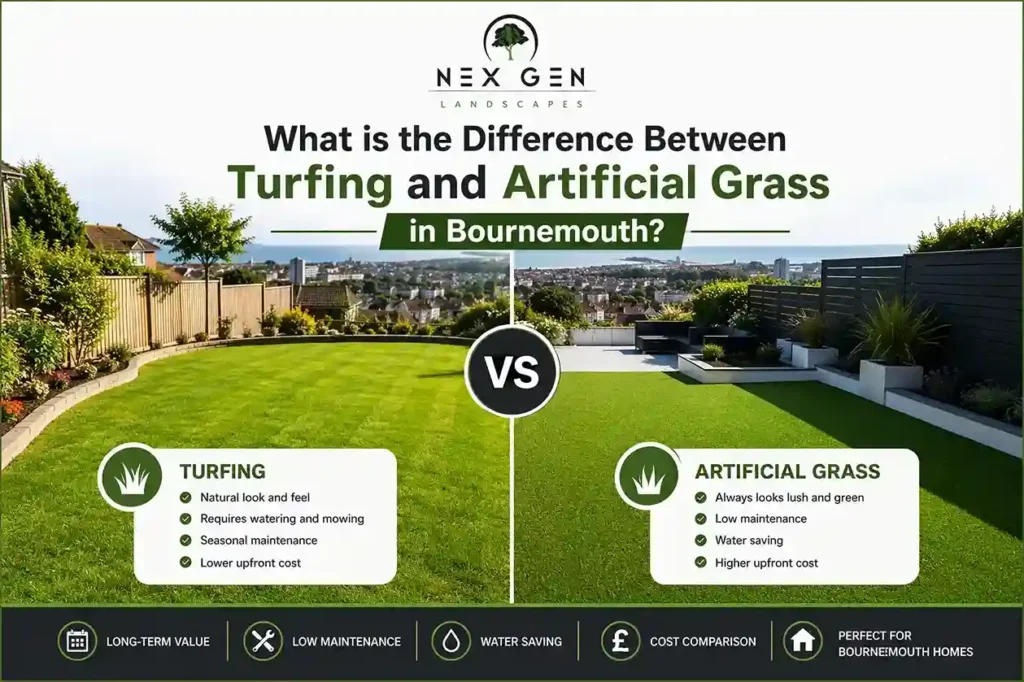
Standing in your garden, staring at a tired patch of grass, wondering whether to lay fresh turf or go for artificial? You’re definitely not alone. It’s one of the most common questions we get at NexGen Landscapes from homeowners right across Bournemouth. And it’s a fair dilemma. Both options can give you a gorgeous, usable lawn — but they’re worlds apart when it comes to cost, upkeep, and how they cope with our coastal climate. Pick the wrong one, and you could end up frustrated within a season. So, what really is the difference between turfing and artificial grass in Bournemouth? In this honest, no-nonsense guide, I’ll break down the pros, the cons, the real costs, and exactly which option suits which type of garden. Grab a cuppa — let’s settle this once and for all.
Turfing vs Artificial Grass: What’s the Real Difference?
Turfing means laying rolls of real, natural grass grown on a farm, which then roots into your soil to form a living lawn. It’s the traditional choice — soft, green, and alive.
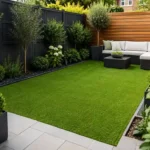
Artificial grass is a synthetic turf made from durable plastic fibres, designed to look and feel like the real thing without any of the growing, mowing, or watering.
One breathes, grows, and changes with the seasons. The other stays perfectly green 365 days a year. Both have their place — it just depends on what you want from your garden.
What Is Turfing? (Pros and Cons)
Real turf gives you that authentic, lush lawn feeling underfoot — and there’s genuinely nothing quite like it on a warm summer’s day.
The pros:
- Natural look and soft feel
- Cooler underfoot in summer
- Great for biodiversity (bees, worms, birds)
- Environmentally friendly
- Cheaper upfront than artificial
The cons:
- Needs regular mowing, watering, and feeding
- Can turn patchy, muddy, or brown
- Struggles in heavily shaded areas
- Takes a few weeks to fully establish
- Higher long-term maintenance effort
If you love gardening and don’t mind the upkeep, real turf rewards you with a beautiful, living lawn.
What Is Artificial Grass? (Pros and Cons)
Artificial grass has come a long way. Modern versions look remarkably realistic — a far cry from the scratchy “fake green carpet” of years gone by.
The pros:
- Virtually zero maintenance
- Stays green all year round
- No mowing, watering, or feeding
- Brilliant for shaded or high-traffic gardens
- Pet and child-friendly (no mud!)
- Perfect for small Bournemouth gardens
The cons:
- Higher upfront installation cost
- Can get warm in direct summer sun
- Not biodegradable
- Less wildlife-friendly
- Eventually needs replacing (after 15–20 years)
For busy families and anyone who wants a tidy lawn without the graft, artificial grass is hard to beat.
Cost Comparison: Turfing vs Artificial Grass in Bournemouth
Let’s talk real numbers. Based on recent NexGen Landscapes projects across the BH postcode area:
| Option | Supply + Install | Lifespan | Ongoing Cost |
|---|---|---|---|
| Real Turf | £8–£15 per m² | 10–15+ years | Mowing, watering, feeding |
| Artificial Grass | £40–£80 per m² | 15–20 years | Minimal (occasional clean) |
So real turf wins on upfront cost, no question. But here’s the bit people forget — over a decade, the mowing, watering, lawn feed, and your own time all add up. Artificial grass costs more to install, but once it’s down, your ongoing costs are next to nothing. For many Bournemouth homeowners, it works out comparable — or even cheaper — over the long run. That’s why Artificial Grass Last in Bournemouth is becoming such a popular choice for low-maintenance, long-lasting garden solutions.
Maintenance: Which Is Easier to Look After?
Real turf is a commitment. You’ll be mowing weekly through spring and summer, watering in dry spells, feeding seasonally, and tackling weeds and moss. Lovely if you enjoy it — a chore if you don’t.
Artificial grass asks almost nothing of you. A quick brush now and then, an occasional rinse, and clearing leaves in autumn is about it. No mower, no hosepipe, no muddy paw prints traipsed through the kitchen.
Which Is Better for Bournemouth’s Coastal Climate?
Bournemouth enjoys some of the sunniest weather in the UK, but we also get salty coastal air, sandy soils in areas like Boscombe and Southbourne, and plenty of autumn rainfall.
Real turf: Can thrive here thanks to our mild climate — but sandy soil drains quickly, meaning more watering in summer to keep it green. Shaded gardens can also struggle.
Artificial grass: Doesn’t care about salt, sand, or shade. It looks identical in January and July, copes brilliantly with our rain (with proper drainage), and never turns into a mud bath. For coastal gardens, it’s often the more reliable choice.
Best Choice for Families, Pets and Small Gardens
Different households, different needs:
- Families with young children: Artificial grass means no mud, year-round play, and a clean lawn
- Dog owners: Pet-friendly artificial grass is easy to clean and won’t get churned up
- Small Bournemouth gardens: Artificial grass stays neat without the faff of a mower
- Keen gardeners: Real turf offers that authentic, living lawn you can nurture
- Wildlife lovers: Real grass supports far more biodiversity
The Environmental Angle
It’d be wrong to skip this. Real turf is the greener option in the truest sense — it supports insects, absorbs carbon, and is fully biodegradable. Artificial grass, while water-saving and chemical-free in use, is made from plastic and isn’t biodegradable. That said, many modern products are now recyclable, and some homeowners feel the water savings balance things out. If sustainability is a top priority for you, real turf has the edge — but it’s worth weighing against the watering and chemical feed it often requires.
So, Which Should You Choose?
Here’s the honest verdict from our team:
- Choose real turf if you love gardening, want a natural feel, care about wildlife, and don’t mind the upkeep.
- Choose artificial grass if you want a low-maintenance, always-green lawn that’s perfect for kids, pets, shade, or small spaces.
There’s no universal best; only what’s best for your garden, lifestyle, and budget.
Final Thoughts
Turfing or artificial grass? There’s no wrong answer — just the right one for your home. Real turf gives you a living, natural lawn full of character. Artificial grass gives you a flawless, fuss-free space all year round. The real key, whichever you choose, is proper ground preparation and professional installation. Even the best turf or artificial grass will disappoint if the groundwork’s rushed.
Frequently Asked Questions (FAQs)
Is artificial grass cheaper than turf?
Not upfront — artificial grass costs more to install. But with no mowing, watering, or feeding, it’s often cheaper over its 15–20 year lifespan.
Which lasts longer, turf or artificial grass?
Quality artificial grass lasts 15–20 years. Real turf can last indefinitely with care, but needs constant maintenance to stay looking good.
Is artificial grass good for dogs?
Yes — pet-friendly artificial grass is durable, easy to clean, and won’t turn muddy, making it popular with Bournemouth dog owners.
Does artificial grass get hot in summer?
It can warm up in direct sun, but rarely uncomfortably so in the UK climate. A quick splash of water cools it down instantly.
How much does it cost to turf a garden in Bournemouth?
Real turf typically costs £8–£15 per m² supplied and laid, depending on turf quality and ground preparation.