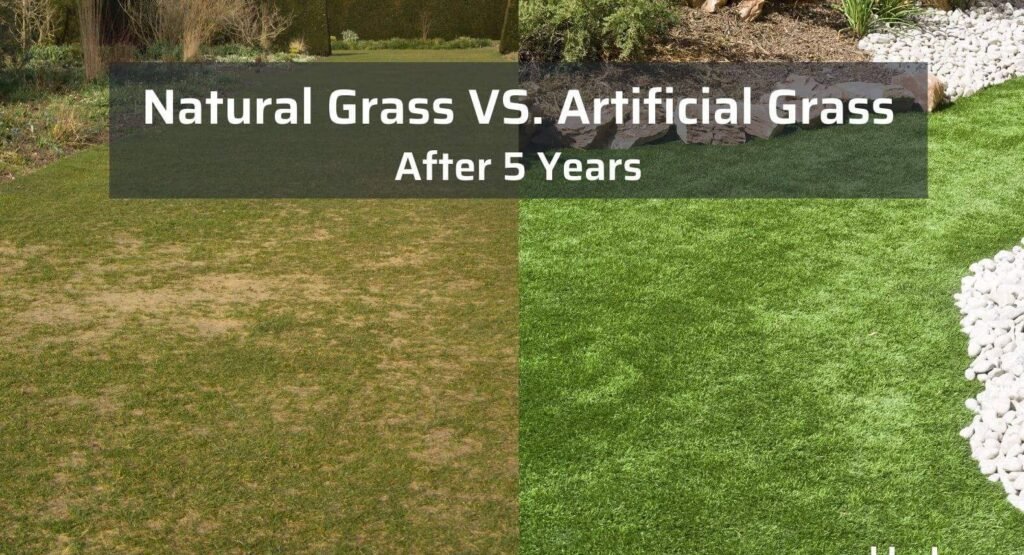
Choosing between natural turf and artificial grass can make a big difference to how your garden looks, feels and needs to be maintained. Both options can create an attractive lawn, but they offer very different benefits. Natural turf provides the traditional look and feel of real grass, while artificial grass offers a low-maintenance alternative that stays green throughout the year. So, which is better for your garden? The answer depends on your budget, lifestyle, maintenance preferences and how you plan to use the space.
What Is the Difference Between Natural Turf and Artificial Grass?
Natural turf is real grass that is grown commercially and supplied in rolls. It is laid over prepared soil and needs regular watering, mowing, feeding and general maintenance while it establishes. Artificial grass is a manufactured lawn surface made from synthetic fibres. It does not grow, so it does not require mowing or regular lawn treatments. Once properly installed, it can provide a consistent appearance throughout the year. The main difference is simple: natural turf is a living lawn, while artificial grass is a permanent synthetic surface designed to look like grass.
Natural Turf: Pros and Cons
Natural turf remains a popular choice for homeowners who want a traditional lawn.
Benefits of Natural Turf
- Natural appearance and texture
- Cooler surface during warm weather
- Suitable for many family gardens
- Can support natural garden biodiversity
- Generally lower initial material cost than some artificial grass systems
- Can be repaired or reseeded when damaged
Things to Consider
Natural turf needs ongoing care. Regular mowing, watering, feeding, weeding and seasonal maintenance are all part of keeping a lawn healthy. Heavy use can also cause worn or muddy areas, particularly during wet weather.
Artificial Grass: Pros and Cons
Artificial grass has become increasingly popular for homeowners looking for a lawn that requires less routine maintenance.
Benefits of Artificial Grass
- No mowing required
- Stays green throughout the year
- Reduced need for watering
- Easier to maintain
- Suitable for busy households
- Can work well in gardens where natural grass struggles
- Available in different styles, colours and pile heights
Things to Consider
Artificial grass usually involves a higher installation cost than simply laying natural turf. The quality of the product and the preparation of the ground can also affect the overall cost. A proper installation is important because drainage, ground preparation, edging and the quality of the artificial grass all influence the finished result.
Which Is More Affordable?
There is no single price that applies to every garden. The cost of natural turf or artificial grass depends on factors such as:
- Garden size
- Ground conditions
- Amount of preparation required
- Access to the garden
- Existing lawn removal
- Drainage requirements
- Product quality
- Edging and finishing requirements
- Installation complexity
Natural turf can have a lower initial installation cost, but it requires ongoing maintenance. Artificial grass can require a larger upfront investment but may reduce some regular lawn-care costs. For an accurate comparison, it is better to assess the individual garden rather than rely on a fixed price per square metre.
Which Requires Less Maintenance?
Artificial grass generally requires less routine maintenance. Natural turf needs regular mowing and may require watering, feeding, aeration, scarifying and weed control depending on its condition. Artificial grass does not need mowing or feeding, but it is not completely maintenance-free. Leaves, dirt and other debris should still be removed, and the surface may need occasional brushing and cleaning.
Which Looks More Natural?
Modern artificial grass can look very realistic, particularly when a quality product is professionally installed. However, natural turf has characteristics that synthetic grass cannot completely reproduce. Real grass changes with the seasons and provides a naturally soft surface. The best choice depends on whether you prefer the natural character of living grass or the consistent appearance of an artificial lawn.
Which Is Better for Families and Pets?
Both options can work well for family gardens. Natural turf provides a soft, familiar surface for children and can be a good choice where you want a traditional lawn. Artificial grass can be useful for busy gardens because it does not become muddy in the same way as natural grass. For households with pets, choosing a suitable product and ensuring the garden has effective drainage are particularly important. If you have pets or young children, consider how the lawn will be used before choosing the most suitable option.
What About Drainage?
Drainage should be considered with either type of lawn. Natural turf relies on the underlying soil to absorb and move water. Poor soil conditions or compacted ground can lead to standing water. Artificial grass also requires suitable preparation and drainage. A correctly installed sub-base and appropriate drainage system can help water pass through the surface effectively. This is one reason professional ground preparation is important when installing either type of lawn.
How Long Does Natural Turf Last?
With suitable care, natural turf can remain healthy for many years. Its condition depends on factors such as soil quality, watering, mowing, weather, foot traffic and general maintenance. A neglected lawn can deteriorate quickly, while a properly maintained lawn can continue to provide an attractive garden surface for a long time.
How Long Does Artificial Grass Last?
The lifespan of artificial grass depends on the product, installation quality, amount of use and maintenance. Higher-quality products are generally designed to withstand regular use, but heavy foot traffic and exposure to the elements can affect their appearance over time. Rather than choosing purely on price, consider the expected level of use and the quality of the product and installation.
Is Natural Turf or Artificial Grass Better for the Environment?
Both options have different environmental considerations. Natural grass is a living surface that can support insects and contribute to a more natural garden environment. However, maintaining a lawn can require water, fertiliser, machinery and other resources. Artificial grass does not need mowing or regular watering, but it is a synthetic product and does not provide the same ecological benefits as living vegetation. For homeowners concerned about sustainability, the wider garden design should also be considered. Planting areas, trees, shrubs and wildlife-friendly spaces can complement either lawn choice.
Which Option Is Right for Your Garden?
Natural turf may be the better option if you:
- Prefer a traditional living lawn
- Enjoy gardening and lawn maintenance
- Want natural grass and soil
- Prefer the feel of real grass
- Want to support a more natural garden environment
Artificial grass may be more suitable if you:
- Want a lower-maintenance lawn
- Prefer a consistently green appearance
- Have limited time for lawn care
- Want to reduce regular mowing
- Need a lawn that can cope with frequent use
There is no universal winner. The right option depends on your garden, budget, lifestyle and expectations.
Making the Right Choice
Before choosing between natural turf and artificial grass, consider the whole project rather than simply comparing the price of the materials. Think about the condition of the existing garden, drainage, access, expected foot traffic, maintenance requirements and how you want the finished space to look. If you’re still unsure, getting professional advice can help you understand which option is most appropriate for your garden.
Turfing and Artificial Grass in Bournemouth
For homeowners considering a new lawn in Bournemouth, the local climate, soil conditions, garden access and intended use can all influence the most suitable option. NexGen Landscapes provides professional turfing and artificial grass installation in Bournemouth, helping homeowners create practical and attractive outdoor spaces. If you already know which option you prefer, you can explore our Turfing & Artificial Grass service for more installation information.