
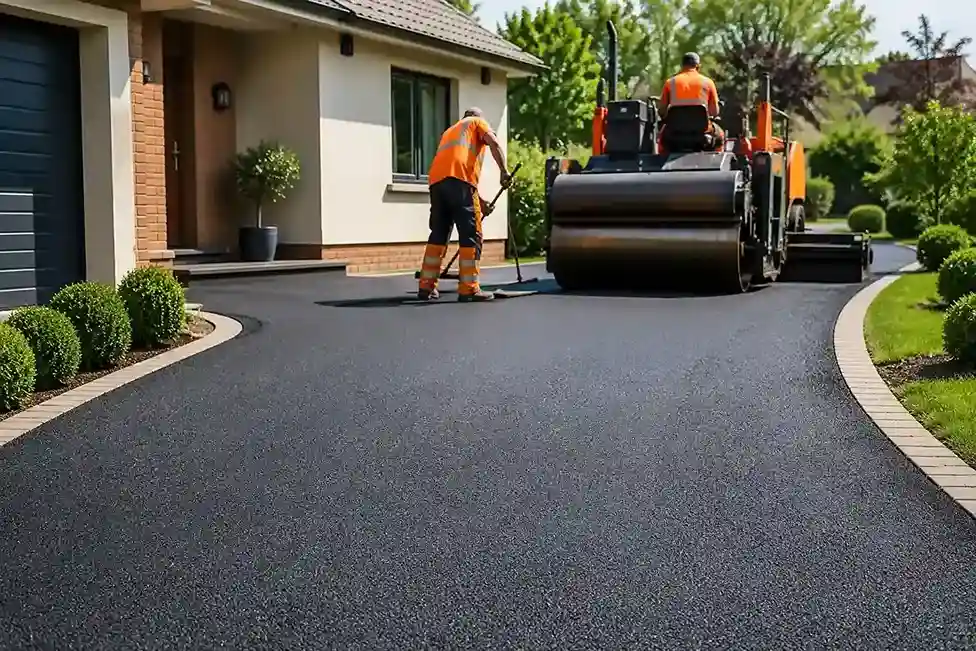
Knowing how to choose a tarmac driveway installer can help you avoid poor groundwork, drainage problems, unexpected charges and a surface that deteriorates too soon. A reliable installer should inspect your property, explain how the driveway will be constructed and provide a detailed written quotation. You should also check their local experience, insurance, waste-registration status, previous projects and guarantee before agreeing to the work.
Price matters, but the cheapest quotation is not always the best value. Much of a driveway’s strength comes from the preparation beneath the visible tarmac, so comparing the full installation specification is more important than comparing totals alone.
What Should You Look for in a Tarmac Driveway Installer?
Before choosing tarmac, compare the Best Types of Driveways in Bournemouth to understand how tarmac, block paving, resin and gravel differ in appearance, maintenance, drainage and long-term performance.
- A site survey before quoting
- Evidence of relevant driveway projects
- A clear groundwork and drainage specification
- A written quotation with no vague exclusions
- Appropriate business insurance
- Responsible waste-removal arrangements
- Realistic payment terms
- A clear guarantee and aftercare process
These checks help you judge how the contractor works, not simply how well they sell the service.
1. Arrange a Proper Site Assessment
A contractor should inspect the proposed driveway before giving a final quotation. Photographs and measurements may help with an early estimate, but they rarely reveal everything that affects the work. The installer should assess:
- The condition of the existing surface
- Vehicle and pedestrian access
- Ground levels and slopes
- Drainage routes
- Inspection covers and utilities
- Boundary walls and edging
- The expected number and weight of vehicles
- Access for machinery and material deliveries
A site assessment allows the contractor to plan the correct excavation, sub-base and drainage rather than applying the same specification to every property. Be cautious when someone gives a fixed price without inspecting the ground or discussing how the driveway will be used.
2. Check Their Tarmac Driveway Experience
General landscaping experience does not automatically mean a contractor is experienced in tarmac driveway construction. Ask how often they install tarmac surfaces and whether they complete the groundwork themselves or use subcontractors. It is also reasonable to request examples of recent projects with similar access, size and drainage requirements.
When reviewing completed work, look at more than the overall appearance. Check whether:
- Edges are straight and properly supported
- Drainage channels are neatly installed
- The surface meets surrounding paths and roads cleanly
- Inspection covers remain accessible
- There are no visible dips or rough transitions
- Decorative borders have consistent joints
Recent photographs show presentation, while older projects can provide better evidence of how the installation performs over time.
3. Ask for a Detailed Written Quotation
A professional quotation should explain exactly what the price includes.
It should normally identify:
- Removal of the existing driveway
- Excavation depth
- Waste disposal
- Sub-base materials
- Compaction
- Edging and restraints
- Drainage work
- Tarmac layers
- Inspection-cover adjustments
- Labour and machinery
- Start and completion estimates
- Payment stages
- Guarantee terms
Avoid relying on a short message containing only a total price. Without a detailed scope, it can be difficult to compare contractors or resolve disagreements later. Ask the installer to identify possible additional costs, particularly where hidden ground conditions may only become visible after excavation.
4. Discuss the Ground Preparation
The groundwork below it distributes vehicle weight and helps prevent sinking, cracking and uneven areas. The correct approach depends on the ground conditions, driveway use and existing construction.
Ask the contractor to explain:
- How much material will be excavated
- What type of sub-base will be used
- How the base will be compacted
- Whether weak ground needs additional treatment
- How the edges will be supported
- How many tarmac layers are proposed
A competent installer should be able to describe the process clearly without hiding behind technical language. Do not accept an installation based only on adding a thin new surface over an unstable driveway. Resurfacing may be appropriate in some situations, but it will not repair movement or drainage problems beneath the existing construction.
5. Make Sure Drainage Is Included
The installer should assess where rainwater currently flows and how the proposed driveway will manage it. Water should not be allowed to collect beside the house, flow uncontrolled onto neighbouring land or create puddles across the parking area.
Possible drainage measures include:
- Correct surface falls
- Permeable or porous asphalt systems
- Drainage channels
- Soakaways
- Directing water to a lawn or planted border
Government guidance states that a new or replacement front driveway generally does not require planning permission where a permeable surface is used, or runoff is directed to a permeable area. An impermeable surface covering more than five square metres may require permission where suitable drainage is not provided. Ask where any channel drain will discharge. Installing a channel without a suitable outlet does not provide a complete drainage solution.
6. Check Dropped-Kerb Requirements
Creating a driveway within the boundary of your property does not automatically allow you to drive across the public pavement. Where vehicle access requires a dropped kerb, approval may be needed from BCP Council. The council advises homeowners to check their property deeds before applying and requires the appropriate permissions for work affecting the highway.
Ask the installer whether:
- A dropped kerb is already approved
- A new application is required
- Planning restrictions could apply
- Highway work will be completed by an authorised contractor
- The driveway design provides safe access
Do not allow an installer to alter the pavement or kerb without the correct approval.
7. Verify Insurance and Waste Arrangements
Check the Contractor’s Insurance: Ask for valid public liability insurance and employers’ liability cover where staff are involved. This protects you if an accident or property damage occurs.
Confirm Responsible Waste Disposal: Check who will remove the old driveway and excavated materials. The contractor should use an authorised waste carrier and dispose of waste legally.
8. Compare Like-for-Like Quotations
One price may include full excavation, drainage and waste removal, while another may cover only basic resurfacing. A lower total does not represent better value when important preparation has been omitted.
Compare each quotation against the same points:
- Excavation
- Sub-base construction
- Tarmac specification
- Drainage
- Edging
- Waste removal
- Inspection-cover work
- Guarantee
- Payment schedule
Ask each contractor to clarify anything that is missing or described vaguely. The objective is not automatically to select the middle quotation. It is to identify which proposal provides the most appropriate construction method and clearest accountability.
9. Review Genuine Work and Customer Feedback
Online ratings can be useful, but they should not be your only evidence. Ask for recent local references or addresses where completed work can be viewed from a public area. A reliable contractor should be able to explain the challenges of previous projects and how they dealt with access, levels or drainage.
When reading reviews, look for repeated comments about:
- Communication
- Punctuality
- Site cleanliness
- Workmanship
- Unexpected costs
- Problem resolution
- Long-term performance
A large number of short, generic reviews may be less useful than detailed feedback describing the complete customer experience.
10. Understand Who Will Complete the Work
The person who surveys and sells the project may not be the person managing it on site.
Before accepting a quotation, ask:
- Who will supervise the installation?
- Will subcontractors be involved?
- Who should you contact during the work?
- Who is responsible for deliveries and waste?
- How will access and safety be managed?
- Who deals with defects or concerns?
Clear responsibility helps prevent confusion when decisions need to be made during construction.
11. Ask About the Installation Schedule
The installer should provide a realistic estimate rather than promising an exact completion date regardless of conditions.
The programme may be affected by:
- Driveway size
- Excavation requirements
- Access
- Drainage work
- Weather
- Material availability
- Additional ground repairs
Ask when you will be able to walk or park on the completed surface. The answer may depend on the material specification, temperature and installation conditions, so follow the contractor’s project-specific guidance.
Red Flags to Avoid
Consider seeking another quotation when a contractor:
- Pressures you to decide immediately
- Demands full payment upfront
- Will not provide a business address
- Refuses to show insurance details
- Gives no written specification
- Cannot explain the groundwork
- Suggests uncontrolled drainage onto the pavement
- Has no verifiable previous projects
- Offers an unusually low price without justification
- Wants to alter the public kerb without approval
One warning sign may have a reasonable explanation. Several together indicate a higher risk.
Should You Choose the Cheapest Installer?
A low price may reflect an efficient contractor, but it may also mean reduced excavation, thinner construction, excluded drainage or no allowance for proper waste removal.
Choose the installer whose proposal best explains:
- How the driveway will be built
- Why the specification suits your property
- How water will be managed
- What the quotation includes
- Who is responsible for the work
- What protection you receive afterwards
The best value is usually a durable installation with a clear scope, not simply the lowest initial cost.
Choose a Tarmac Driveway Installer Carefully
Learning how to choose a tarmac driveway installer means looking beyond price and first impressions. A dependable contractor should survey the property, recommend suitable groundwork, provide a clear drainage plan and explain every part of the quotation. Insurance, responsible waste handling, previous work and written guarantees offer additional reassurance.
NexGen Landscapes provides driveway and landscaping services for residential and commercial customers in Bournemouth and surrounding parts of Dorset. The company offers quotations for driveway projects alongside block paving, gravel and other landscaping work. Contact NexGen Landscapes on 07734 928740 to discuss your driveway and arrange a site assessment.
Frequently Asked Questions (FAQs)
How many tarmac driveway quotes should I get?
Obtaining around three detailed quotations usually gives you enough information to compare specifications, prices and contractor approaches.
Should a driveway installer visit before quoting?
Yes. A site visit helps the installer assess access, ground conditions, levels, drainage and the existing surface before providing a final price.
What should a tarmac driveway quotation include?
It should cover excavation, sub-base preparation, tarmac layers, edging, drainage, waste removal, labour, payment terms and guarantee details.
Does a tarmac driveway installer need insurance?
You should check for suitable public liability insurance and, where the contractor employs staff, employers’ liability cover.
Should I pay for a driveway in advance?
A deposit may be reasonable, but avoid paying the complete cost upfront. Agree written payment stages linked to project progress.
How can I check a driveway installer’s previous work?
Ask for recent local projects, detailed photographs and customer references rather than relying only on website images or ratings.
Who is responsible for driveway planning permission?
The property owner is ultimately responsible for ensuring permission is in place, although an experienced installer should identify likely requirements.
Can an installer create a dropped kerb?
Only properly authorised highway contractors should carry out dropped-kerb work after the necessary BCP Council approval has been obtained.