A garden that stays wet for days after rainfall is more than an inconvenience. Persistent standing water can damage lawns, affect planting and make patios and garden design in Bournemouth and other outdoor areas difficult to use. Landscapers solve drainage problems by first finding out why water is collecting. They assess soil condition, ground levels, existing drainage and the direction of surface-water runoff before deciding on the most suitable solution.
Depending on the site, this may involve soil aeration, adjusting levels, installing a French drain or land drain, improving hard-landscaping drainage or using a soakaway where conditions allow. For garden drainage Bournemouth projects, the important point is that every garden needs to be assessed individually. Installing drainage without understanding the cause can simply move the water from one problem area to another.
What Causes Garden Drainage Problems?
Waterlogging occurs when water cannot drain through or away from the soil quickly enough. The RHS explains that it is particularly common in poorly drained ground and where heavy soils have become compacted. Prolonged saturation also reduces the air available around plant roots.
Common causes include:
- Compacted soil: Regular foot traffic, construction work or machinery can reduce the spaces through which water moves.
- Low areas: Rainwater naturally collects where garden levels create dips.
- Poorly draining soil: Some ground absorbs water much more slowly than others.
- Hard landscaping: Patios and other impermeable areas can change the direction and quantity of surface runoff.
- Blocked or damaged drainage: Existing channels, gullies or pipework may no longer function correctly.
- Neighbouring levels: Water can sometimes enter from higher surrounding ground.
The source should be identified before any major excavation starts.
Why Does Water Sit on My Lawn After Rain?
A lawn temporarily becoming wet after unusually heavy rainfall does not necessarily mean it needs a new drainage system. However, water that repeatedly pools in the same places or remains for long periods may indicate soil compaction, slow infiltration, unsuitable ground levels or another drainage problem. The RHS specifically recommends aerating compacted lawns as one way of improving the movement of water and air through the soil.
How Does a Landscaper Assess a Drainage Problem?
Good drainage work starts with diagnosis rather than immediately digging trenches. A landscaper will usually inspect several parts of the garden.
Where is the water collecting? Persistent puddles, wet lawns, moss, saturated beds and water against paved areas can all provide useful clues.
Where is the water coming from? The cause might be direct rainfall, runoff from paving, higher surrounding ground or an existing drainage problem. The RHS also advises considering less obvious causes such as leaking pipes or natural springs where wet patches are unusually localised.
How does the garden fall? Ground levels determine where surface water naturally travels.
What is the soil like? Dense or compacted ground can behave very differently from freely draining soil.
Where can the water safely go? This is crucial. Collecting water in a drain is only useful if there is an appropriate route or destination for it.
Professional drainage work is about establishing where the water comes from, where it collects and where it can safely be managed.
What Garden Drainage Solutions Can Landscapers Use?
There is no single best drainage system. The correct approach depends on the cause and the conditions found during the site assessment.
Relieving Compacted Soil
If compaction is preventing rainfall from penetrating a lawn effectively, improving the soil may be enough to make a noticeable difference. Aeration creates openings in the surface and can be carried out using suitable spiking or hollow-tining methods. The RHS recommends aerating compacted lawns to help improve drainage and grass growth. It is also sensible to avoid repeatedly walking or operating heavy equipment over saturated soil. Aeration is useful for compaction, but it will not correct every waterlogged garden. A garden with unsuitable levels or a larger drainage problem may need a different solution.
Adjusting Garden Levels and Surface Falls
Sometimes the issue is simply that water is being directed into the wrong place. Landscapers may be able to reshape selected areas, correct low spots or create more appropriate surface falls so rainfall moves away from frequently waterlogged sections. Changing one level can affect another part of the garden, so water should not simply be redirected towards the house, neighbouring properties or another low point. Levels should also be considered when installing patios, paths, lawns and other landscaping as part of the same project.
Installing French Drains or Land Drains
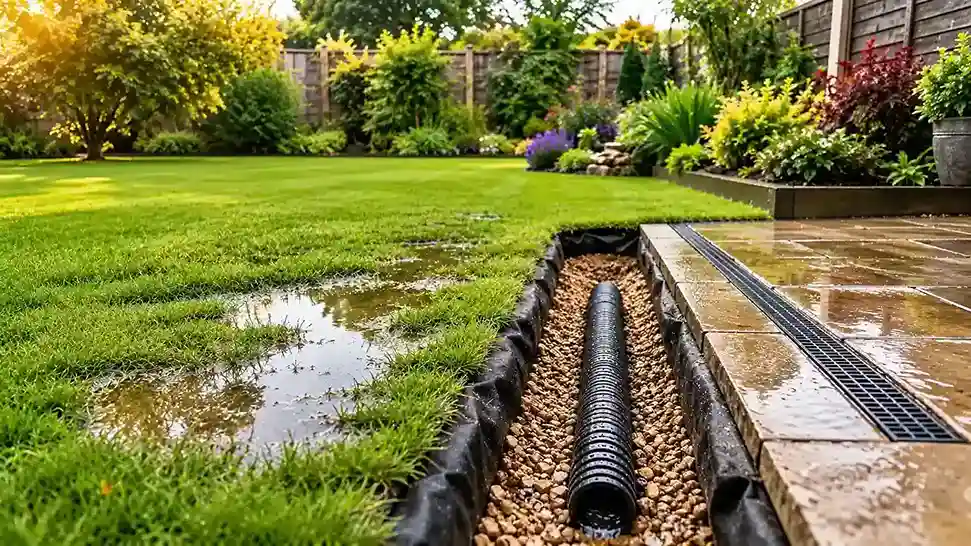
Where water needs to be collected and moved through the garden, underground drainage may be considered. A typical system can involve an excavated trench, coarse aggregate and, where required, perforated drainage pipework. The RHS includes buried porous pipes and gravel-filled French ditches among recognised methods for improving garden drainage. The precise construction should suit the site. A French drain should not be installed simply because standing water is visible. Its effectiveness depends on factors such as ground conditions, the location of the wet area and where the collected water is ultimately discharged. That is why universal trench depths or one-size-fits-all installation instructions are rarely appropriate for residential gardens.
Using a Soakaway Where the Ground Is Suitable
A soakaway is designed to receive surface water and allow it to infiltrate gradually into the surrounding ground. It can be useful in appropriate conditions, but a soakaway is not automatically suitable for every Bournemouth garden. The ground must be capable of accepting the water. Space, nearby structures, groundwater conditions and the proposed location also matter.
The same principle applies to rain gardens. RHS guidance notes that their suitability depends heavily on how quickly the ground can absorb water, and sites with very heavy clay or a high water table may not be appropriate. This is why infiltration and site conditions should be assessed rather than assumed.
Improving Drainage Around Patios and Paving
Hard landscaping can have a major influence on how water moves around a garden. A new patio should therefore be planned alongside its drainage rather than treating water management as an afterthought.
Depending on the project, this may involve:
- suitable surface falls
- permeable areas
- gravel margins
- planted borders
- drainage channels where appropriate
- retaining enough ground for natural infiltration
For front gardens specifically, current Planning Portal guidance distinguishes between permeable surfacing or water directed to a permeable area and larger impermeable surfaces that do not provide suitable runoff management. For rear gardens and patios, the practical principle remains useful: consider where rainfall will go before replacing absorbent ground with more hard surface.
Improving Soil and Planting for Wetter Areas
Not every damp garden needs underground pipework. Where the soil is naturally moisture-retentive, improving its structure and choosing plants suited to the conditions may sometimes be a more proportionate approach. The RHS advises that organic matter can help improve certain wet soils, while simply mixing small quantities of sand or grit into heavy clay is unlikely to solve the underlying drainage problem. In persistently damp planting areas, raised beds or plants better adapted to wetter soil may also form part of the wider garden design.
Are Garden Drainage Problems Relevant in Bournemouth?
There is no single soil or drainage condition that applies to every Bournemouth property. Individual gardens can vary in their ground levels, existing hard landscaping, access, soil condition, neighbouring levels and previous alterations. This is why garden drainage Bournemouth work needs to begin with the property itself rather than broad assumptions about the area. BCP Council provides information about local flooding and works with organisations.
Including the Environment Agency and Wessex Water on wider flood-risk management. Surface-water flooding is among the issues considered within that work. However, regional flood risk and a waterlogged back garden are not automatically the same problem. A recurring wet patch behind a patio may have a completely different cause from a wider surface-water flooding event. Each garden should therefore be assessed on its own evidence.
How Much Does Garden Drainage Work Cost?
There is no useful fixed price for garden drainage without inspecting the site.
Cost depends on factors such as:
- size of the affected area
- ease of access
- amount of excavation
- soil and ground conditions
- type of drainage required
- pipework and aggregate
- waste removal
- reinstatement of lawns or paving
- complexity of existing levels
A compacted lawn requiring aeration is a very different project from a garden needing extensive excavation and an installed drainage route. A site assessment therefore provides a more reliable basis for a quotation than a generic price per square metre.
Can You Fix Garden Drainage Yourself?
Some minor problems can be improved without major landscaping work. A homeowner may be able to aerate a compacted lawn, keep existing drainage channels clear or reduce unnecessary traffic over wet soil. Professional assessment becomes more sensible when water repeatedly approaches the house, large areas remain saturated, the source cannot be identified or the solution may involve excavation, pipework, significant changes in levels or a soakaway. It is also advisable to get professional input where drainage alterations could affect neighbouring land.
How Can Future Drainage Problems Be Reduced?
Good landscaping can help prevent problems being built into a redesigned garden.
- Check ground levels: Avoid creating unnecessary low points where rainfall will collect.
- Plan paving carefully: Decide where runoff will travel before adding more hard landscaping.
- Protect the soil: Avoid excessive compaction during construction.
- Maintain drainage: Keep channels and outlets clear where they are installed.
- Plan the whole garden: Coordinate drainage with patios, lawns, planting, fencing and decking.
Drainage works best when it forms part of the garden plan from the beginning rather than being added after the landscaping is finished.
Solve the Cause, Not Just the Standing Water
Effective garden drainage Bournemouth solutions begin with understanding why the water is there in the first place. For one garden, improving compacted soil may be enough. Another may need corrected levels, better patio drainage, a French drain, land drainage or a suitable infiltration solution. The correct choice depends on the individual site rather than a standard formula.
NexGen Landscapes provides garden design and landscaping in Bournemouth, with drainage considerations forming part of its wider planning for patios, lawns and complete garden layouts. Addressing drainage alongside the rest of the landscape helps create an outdoor space that not only looks better, but also works properly when the weather turns wet.
Frequently Asked Questions About Garden Drainage
What Is the Best Drainage Solution for a Waterlogged Garden?
There is no universal best solution. The right approach depends on why the water is collecting, soil conditions, garden levels and where the excess water can safely be managed.
Do French Drains Fix Waterlogged Gardens?
They can be effective in suitable circumstances, but only when the location, ground conditions and drainage route allow them to function correctly.
Can Compacted Soil Cause Standing Water?
Yes. Compaction reduces the pore space available for air and water movement and is a recognised cause of poor drainage and waterlogging.
Can Patios Cause Garden Drainage Problems?
They can contribute to runoff if additional hard surfaces prevent rainfall from soaking naturally into the ground. Drainage and surface falls should therefore be considered during patio planning.
Does Every Waterlogged Garden Need a Soakaway?
No. A soakaway is only one potential option, and the ground must be suitable for infiltration before it is considered.
When Should I Call a Professional Landscaper?
Professional advice is worthwhile when waterlogging is persistent, the cause is unclear or fixing it is likely to involve excavation, drainage installation or significant alterations to garden levels.