Walk into any garden centre or browse any landscaping website in the UK, and you will quickly discover just how many patio materials are available to homeowners today. A decade ago, the choice was relatively straightforward. Today, the options span everything from classic natural stone to ultra-modern resin bound surfaces — and choosing the wrong material for your garden. Your lifestyle, or your budget can be an expensive lesson.
At NexGen Landscapes, we have installed patios and paving across Bournemouth. And the wider Dorset area for years. In that time we have worked with virtually every patio surface option available on the UK market — and we have seen first-hand how the right material can genuinely transform a garden. And how the wrong choice can cause frustration within a few seasons.
Patio Materials at a Glance — UK Comparison Guide
Before we dive into the details on each material. Here is a quick reference table covering the most commonly used outdoor paving materials in the UK today:
1. Natural Sandstone — The Nation’s Favourite
Ask most UK landscapers which patio surface they install most frequently. And the answer will almost certainly be natural sandstone. It has been the go-to choice for British gardens for decades — and with good reason. Sandstone offers a warmth and character that manufactured materials struggle to replicate. Each slab is subtly unique, with natural tonal variation that gives a finished patio an authentic, organic feel. It suits traditional cottage gardens and period properties. And contemporary spaces alike which is a large part of why it remains so consistently popular across the UK.
Key Strengths
- Timeless aesthetic that complements virtually any garden style
- Naturally slip-resistant surface texture — particularly important in the UK’s wet climate
- Widely available from multiple suppliers keeping costs competitive
- Can be cut and shaped to suit complex garden layouts
Things to Consider
- Requires periodic sealing to prevent staining and moisture ingress
- Tonal variation between batches can make repairs tricky if slabs need replacing later
- Softer varieties can be prone to surface erosion over time in exposed positions
For Bournemouth homeowners in particular, we always recommend sealing sandstone patio surfaces. The coastal air and moisture levels make this a worthwhile annual investment in protecting your paving.
2. Porcelain Paving — The Modern Standard
Porcelain has become one of the fastest-growing patio surface options in the UK over the past five years — and the numbers bear this out. According to data from the UK Paving Industry, porcelain now accounts for over 30 per cent of all new patio installations in England, up from just eight per cent a decade ago.
The reason for this surge in popularity is straightforward: porcelain delivers a premium. Modern aesthetic with almost no ongoing maintenance burden. Its non-porous surface resists staining, fading, and moisture absorption — making it an exceptionally practical choice for the British climate.
Key Strengths
- Virtually zero maintenance — an occasional rinse keeps it looking pristine
- Extremely durable and highly resistant to cracking, even in freeze-thaw conditions
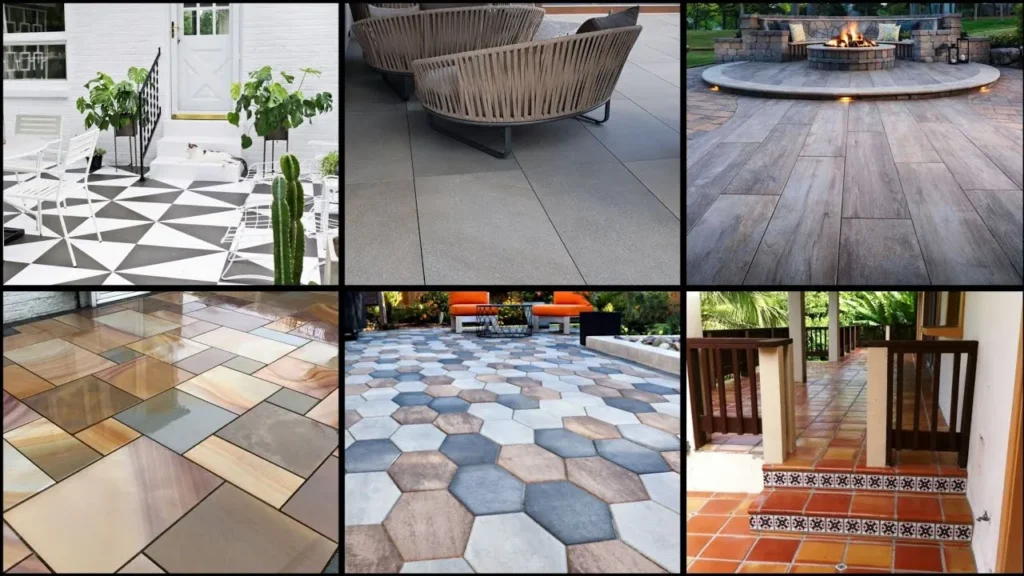
- Available in a wide range of colours, sizes, and finishes, including wood-effect and stone-effect options
- Does not require sealing, unlike most natural stone options
Things to Consider
- Requires an experienced installer — an inadequate sub-base will cause porcelain to crack
- Polished finishes can become slippery when wet — always specify a textured or grip-finish variety for outdoor use
- Higher upfront cost compared to concrete or budget sandstone options
NexGen Tip: Always specify a minimum R11 slip-resistance rating for any porcelain used outdoors in the UK. This is the standard recommended by the Health and Safety Executive for wet external surfaces.
3. Concrete Paving Slabs — The Budget-Conscious Choice
Concrete paving slabs are among the most widely used hard landscaping materials in the UK — and they deserve more credit than they often receive. Today’s concrete slabs are a far cry from the drab grey squares of the 1980s. Modern manufactured concrete slabs are available in a broad range of textures colours and finishes that can closely mimic the appearance of natural stone at a fraction of the cost.
Key Strengths
- Highly cost-effective — one of the most affordable patio flooring options UK-wide
- Consistent sizing and finish makes them straightforward to lay, reducing labour costs
- Available in a wide variety of sizes, colours, and textures
- Readily available from most builders’ merchants across the UK
Things to Consider
- Shorter lifespan than natural stone or porcelain — typically 15 to 25 years with good maintenance
- Can fade and show wear more visibly over time in high-traffic areas
- May develop surface cracking in severe frost conditions if not properly bedded
4. Clay Pavers — Built to Last Generations
Clay pavers are the hidden gem of patio materials UK — consistently underestimated. Yet offering a lifespan and resilience that most other surfaces simply cannot match. Made from natural clay fired at high temperatures. These pavers have been used in British streetscapes and gardens for well over a century.
Their natural colour runs all the way through the body of the paver — not just the surface. Which means they do not fade chip or wear in the way that surface-finished materials can. For period properties, Victorian terraces, and heritage-style gardens across Bournemouth and beyond clay pavers are a particularly sympathetic and durable choice.
Key Strengths
- Exceptional longevity — clay pavers regularly outlast the properties they are laid around
- Through-body colour means fading is virtually non-existent
- Naturally permeable varieties are available, supporting SUDS drainage compliance
- Beautifully suited to traditional and character garden settings
Things to Consider
- Smaller format than most stone slabs — larger areas require more individual units and more laying time
- Premium products carry a higher price point than standard concrete alternatives
- Sourcing matching replacements can occasionally be challenging for older or discontinued ranges
5. Resin Bound Surfaces — The Low-Maintenance Revolution
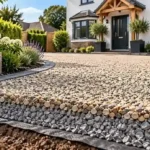
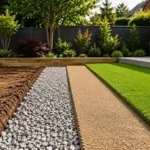
Resin bound paving has quietly transformed the way UK homeowners think about hard landscaping over the past decade, especially for New Driveway Installation projects. Created by encapsulating natural aggregates within a clear UV-stable resin and trowelling the mixture onto a prepared base, resin bound surfaces offer a seamless, attractive finish that is genuinely unlike anything else available. Originally associated primarily with driveways, resin bound surfaces are increasingly being specified for garden patios and courtyard areas — particularly where a clean, contemporary aesthetic is the goal.
Why Resin Bound Works Well in the UK
Its fully permeable surface means rainwater drains through naturally, eliminating surface pooling — a significant practical benefit in the UK’s unpredictable climate. It is also weed-resistant, easy to clean, and available in a wide range of aggregate blends and colours.
At NexGen Landscapes, we have installed resin bound surfaces across a range of Bournemouth properties over the years — from compact urban courtyards to expansive garden entertaining spaces — and it consistently delivers one of the best long-term value propositions of any patio material on the market.
6. Cobblestone and Sett Paving — Character That Lasts a Lifetime
Cobblestone and natural set paving outlasts virtually every other patio material available in the UK. Used in British gardens for centuries, these small-format stone units deliver unmatched durability, excellent slip resistance, and a richness of texture that larger slabs cannot replicate. They work beautifully as feature borders, circular centrepieces, or standalone courtyard surfaces. Installation is labour-intensive, but the finished result is extraordinary.
So — Which Patio Material Is Right for Your Garden?
The honest answer is that there is no single best patio material UK-wide. The right choice depends on a combination of factors that are specific to your property, your garden, and how you plan to use the space. Here is a simple framework we use at NexGen Landscapes when helping Bournemouth homeowners choose the right surface:
- Define your priorities: Is it appearance, longevity, low maintenance, cost, or a combination?
- Consider your garden’s aspect and microclimate: South-facing gardens in full sun have different needs from shaded north-facing spaces
- Think about how the patio will be used: A family entertaining space with heavy foot traffic needs a more durable surface than a quiet seating nook
- Factor in the long-term cost: A cheaper material with higher maintenance costs may cost more over ten years than a premium surface laid once and forgotten
- Talk to an experienced local contractor: Someone who works in your specific area will have practical knowledge of what performs best in your local conditions
Need Expert Advice on Patio Materials in Bournemouth?
At NexGen Landscapes, helping homeowners navigate the world of garden paving materials is something we do every single day. We work across Bournemouth and the surrounding Dorset area, and we have the local knowledge, material expertise, and hands-on installation experience to guide you towards the right choice for your specific garden and circumstances.
Whether you are drawn to the classic warmth of natural sandstone, the sleek practicality of a porcelain patio, or something more distinctive like resin bound or cobblestone, we will give you genuinely impartial advice — and then deliver a finished result that lives up to your expectations.
Frequently Asked Questions (FAQs)
What is the best patio material in the UK?
The best patio materials in the UK are porcelain and natural stone. Porcelain is highly durable, low-maintenance, and resistant to moisture. While natural stone offers a timeless appearance and long-lasting performance in varying weather conditions.
What is the cheapest patio material in the UK?
The most affordable patio materials in the UK are gravel and concrete slabs. Gravel is the cheapest and easiest to install, while concrete slabs offer a balance between cost, durability, and appearance.
Which patio material lasts the longest?
Natural stone and porcelain paving are the longest-lasting patio materials. With proper installation and maintenance, they can last for decades without significant wear or damage.
Is porcelain better than natural stone for patios?
Porcelain is better for low maintenance and modern designs. While natural stone is ideal for a traditional and premium look. Porcelain is non-porous and stain-resistant. Whereas natural stone requires sealing but offers unique textures.
What patio material is best for the UK weather?
Porcelain, sandstone, and concrete are all suitable for UK weather. Porcelain is especially effective because it is non-porous, frost-resistant, and performs well in wet conditions.
Do patio slabs need maintenance?
Yes, most patio materials require some maintenance. Porcelain needs minimal upkeep. Natural stone and block paving may require cleaning sealing and weed control to maintain their appearance.
How much does a patio cost in the UK?
Patio costs in the UK typically range from £20 to £150+ per square metre. Depending on the material, design complexity, and installation costs.