It’s a sunny weekend in Poole, and you’re sipping your coffee in the garden. And suddenly you’re picturing a brand-new patio out there. Then comes the tricky bit — porcelain or natural stone paving? Trust me you’re not the only one stuck on this. At NexGen Landscapes, it’s easily the most common question we get from homeowners in Poole Sandbanks and Bournemouth. Both look gorgeous. Both have their loyal fans. But one genuinely suits your home budget and our coastal climate better.
What Is Porcelain Paving?
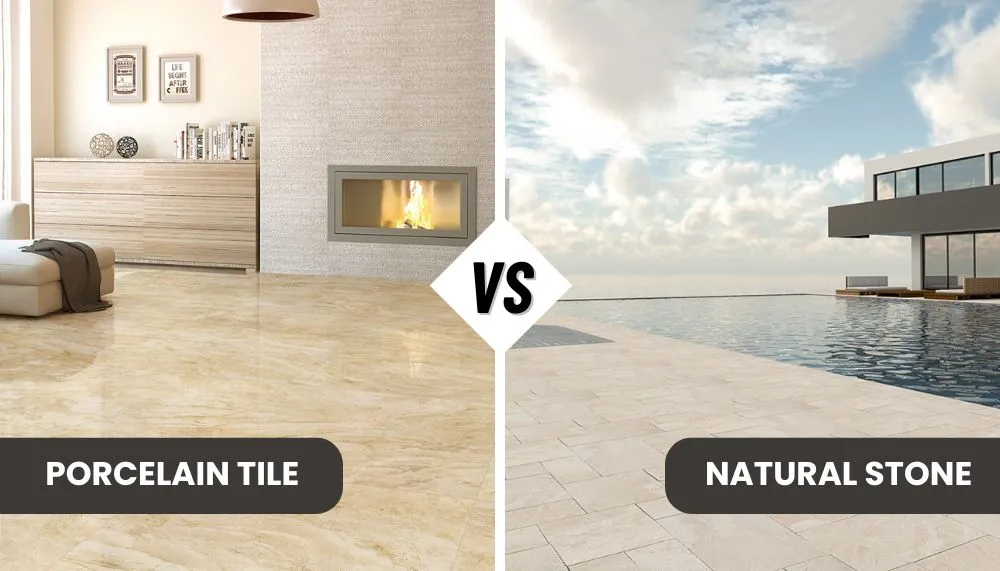
Porcelain paving is a man-made product created by firing refined clay sand and minerals at extremely high temperatures (over 1,200°C). The result is a dense vitrified slab that’s almost impossible to stain. Crack, or fade. You’ll usually see porcelain in 20mm thickness for outdoor use with a slip rating of R11 or higher which is genuinely important in a rainy spot like Poole.
Why homeowners in Poole love porcelain:
- Practically zero maintenance
- Doesn’t absorb water (great for coastal humidity)
- Resistant to algae, moss, and salt spray
- Colour stays the same for 20+ years
- Available in modern, sleek finishes
The downsides:
- Higher upfront cost
- Trickier to cut and lay (needs an experienced installer)
- Can feel “too modern” for traditional cottages
What Is Natural Stone Paving?
Natural stone is exactly what it sounds like — slabs cut directly from the earth. The most popular options in the UK include sandstone. Limestone, granite, slate, and Yorkstone. Each slab is unique, with natural variations in colour, texture, and grain. That’s what makes it so charming — but also slightly unpredictable.
Why people choose natural stone:
- Timeless, characterful appearance
- Blends beautifully with cottage gardens & period homes
- Each slab is one-of-a-kind
- Generally cheaper upfront than porcelain
- Adds rustic charm to Dorset properties
The downsides:
- Porous — absorbs water, stains, and oils
- Needs regular sealing (every 2–3 years)
- Prone to moss and algae in damp areas
- Colours can fade or change over time
- Heavier and trickier to handle
Porcelain vs Natural Stone Paving: The Key Differences
Here’s a quick side-by-side comparison based on what actually matters when you’re choosing paving for a Poole home:
| Feature | Porcelain Paving | Natural Stone Paving |
|---|---|---|
| Lifespan | 20–30+ years | 15–25 years (with sealing) |
| Maintenance | Very low | Moderate to high |
| Water Absorption | Less than 0.5% | 1–6% |
| Slip Resistance | R11+ (excellent) | Varies by stone |
| Cost (per m²) | £40–£80 | £25–£60 |
| Installation Cost | Slightly higher | Standard |
| Frost Resistance | Excellent | Good (sandstone can flake) |
| Stain Resistance | Excellent | Poor without sealing |
| Aesthetic | Modern, uniform | Rustic, natural variation |
Which Paving Is Better for Poole’s Coastal Climate?
Now, this is where it gets interesting — because Poole isn’t just any UK town. We’re right on the coast, which means:
- Salt-laden air
- High humidity year-round
- Frequent rainfall (around 800mm annually)
- Damp winters with occasional frost
In our experience laying patios from Canford Cliffs to Branksome and Lilliput. Porcelain handles coastal weather noticeably better. Salt spray, sea mist, and constant damp don’t faze it. Natural stone, especially sandstone can suffer from efflorescence (that white powdery residue) and moss build-up if it’s not sealed properly every couple of years.
Cost Comparison: What Will You Actually Pay in Poole?
Let’s talk real numbers. Based on recent NexGen Landscapes projects across the BH postcode area:
Porcelain Paving (Supply + Install)
- Materials: £40–£80 per m²
- Installation: £80–£120 per m²
- Total: £120–£200 per m²
Natural Stone Paving (Supply + Install)
- Materials: £25–£60 per m²
- Installation: £70–£100 per m²
- Total: £95–£160 per m²
So yes — natural stone wins on upfront cost. But here’s the bit most people forget: maintenance costs.
Over 15 years, a natural stone patio will likely need:
- Sealing 5–7 times (£200–£400 each time)
- Deep cleaning at least 2–3 times
- Possible replacement of damaged slabs
Porcelain? A jet wash twice a year and you’re sorted. When you factor in lifetime cost, porcelain often works out cheaper in the long run.
Which Paving Suits Your Home’s Style?
This is the part no SEO guide will tell you — but it matters enormously.
Go with porcelain if your home is:
- A modern new-build (think Poole’s newer developments)
- A contemporary renovation
- A coastal property with sleek lines
- Owned by someone who hates maintenance
Go with natural stone if your home is:
- A period cottage in Old Town Poole
- A Victorian or Edwardian terrace
- Surrounded by traditional cottage gardens
- Owned by someone who loves authentic, lived-in character
I once worked with a couple in Lower Parkstone who chose porcelain for their modern extension at the back, but kept Yorkstone in the front courtyard. Honestly? That hybrid approach often gives the best of both worlds.
Will It Add Value to My Poole Home?
According to a 2024 report by the Royal Institution of Chartered Surveyors (RICS), a well-designed patio can add 5–10% to a property’s value. Of course, the value boost depends heavily on the Types of Patio Materials you choose. In Poole’s competitive housing market — especially in sought-after areas like Sandbanks, Lilliput, and Canford Cliffs — quality paving genuinely pays for itself when you sell. Estate agents we’ve spoken to locally consistently agree: buyers love porcelain for its low-maintenance appeal, but natural stone wins hearts in heritage properties.
Final Verdict: Which Should You Choose?
Here’s the honest answer — there’s no universal winner. But for most Poole homeowners we work with:
- If you want low maintenance, modern aesthetics, and long-term value → choose porcelain
- If you want traditional charm, lower upfront cost, and natural character → choose natural stone
Either way, the secret to a stunning patio that lasts decades isn’t just the slab — it’s the preparation, sub-base, and installation quality. Even the best porcelain looks rubbish if it’s laid badly.
Ready to Transform Your Poole Garden?
At NexGen Landscapes, we’ve been designing and installing porcelain and natural stone patios across Poole, Bournemouth, and the wider Dorset area for years. Whether you’re after a sleek modern porcelain terrace or a rustic Yorkstone courtyard, our team will guide you through every step — from sample selection to final installation.
Frequently Asked Questions
Is porcelain paving slippery when wet?
Not if you choose a slab with an R11 slip rating or higher. Most outdoor porcelain in the UK meets this standard, making it safe even in Poole’s rainy winters.
Does natural stone need sealing?
Yes — most natural stones should be sealed every 2–3 years to prevent staining, moss, and water damage. Granite and slate are more forgiving than sandstone or limestone.
Can porcelain paving crack in frost?
Very rarely. Because it absorbs almost no water, there’s nothing to expand and crack during freezes. It’s one of porcelain’s biggest advantages in the UK weather.
Which lasts longer — porcelain or natural stone?
Porcelain typically lasts 20–30+ years with minimal upkeep. Natural stone can last just as long, but only if properly sealed and maintained.
Is porcelain or natural stone better for a Poole driveway?
For driveways, we generally recommend 22mm porcelain or granite setts. Both handle vehicle weight and coastal weather brilliantly.